Guide
What Should a Laboratory Equipment Website Include?
A laboratory equipment website has a harder job than most B2B sites. It has to explain complex products to several people at once, hold a lot of technical data, and turn interest into accurate quote requests. This guide sets out what to include and in what order.
Start with the buyers, not the pages
Most instrument purchases involve at least three roles. A researcher checks that the technique and performance fit the method. A lab manager checks footprint, utilities, service and training. Procurement checks price, terms, approvals and compliance documents.
Write down what each role needs to know before contacting you. Every page you build should answer at least one of those questions without making anyone fill in a form first.
Navigation that matches how scientists search
Organize products in more than one way: by product type, by technique and by application. A buyer looking for a centrifuge for cell culture should reach the right models from the centrifuge category or from a cell culture application page.
Each of these routes should be a real page with its own short introduction, not just a filter. That gives search engines something to index and gives buyers context.
Product pages that carry the decision
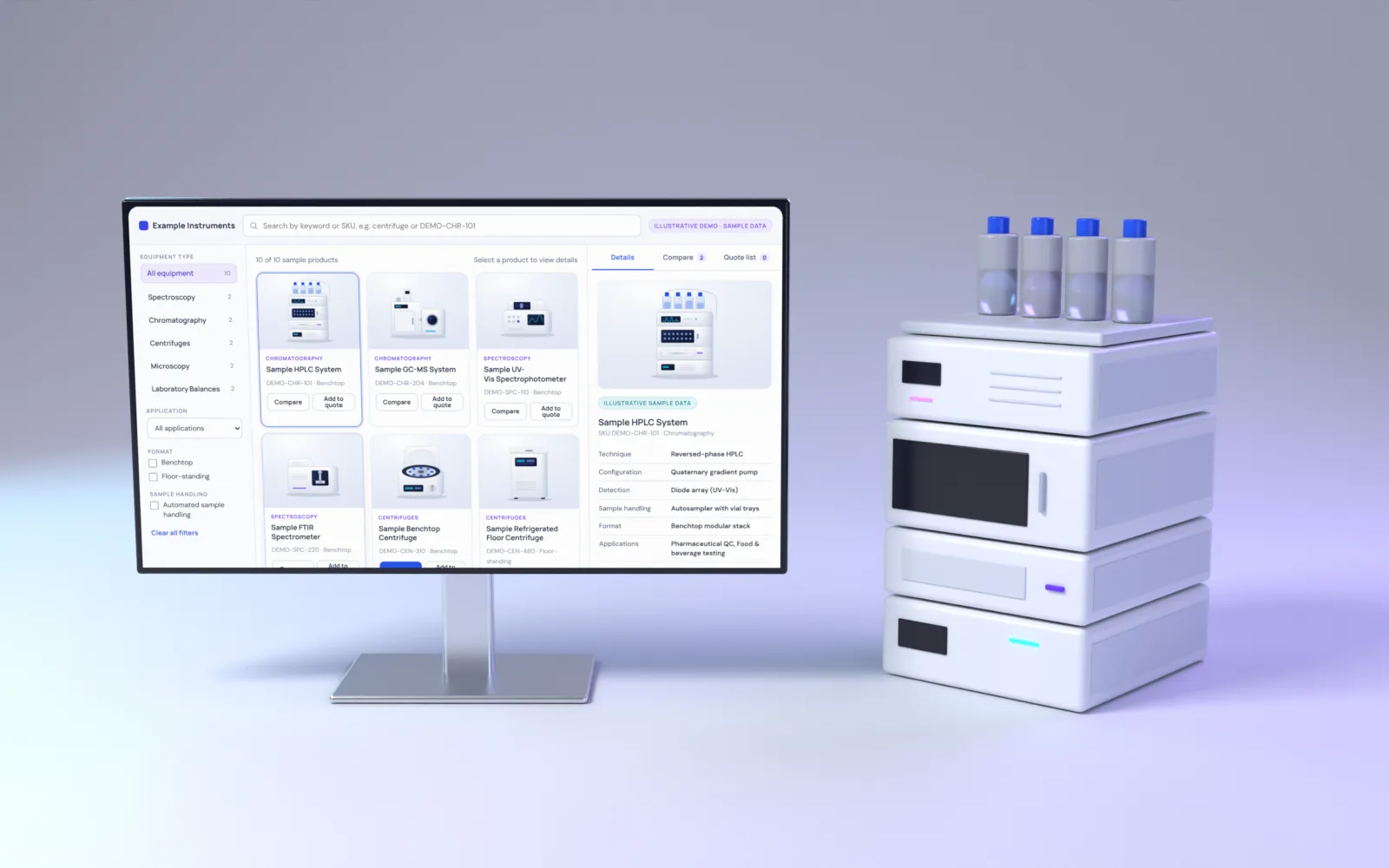
A strong product page includes the key specifications on the page, variants and options, compatible accessories and consumables, downloadable documents, and a clear request for a quote or demo.
Keep the most important values visible without opening a PDF. Datasheets remain useful, but they should not be the only place the information lives.
Documents in one place
Datasheets, manuals, application notes, safety data sheets and certificates belong in a central library, linked to the right products. When a document is updated, it should change everywhere at once.
For consumables and reagents, certificates of analysis searchable by lot number save your support team a lot of time.
Inquiry routes with context
Request a quote, book a demonstration, ask for a sample and talk to a specialist are different requests. Give each one its own short form, and pass the product, configuration and page the visitor came from to your sales team.
If you sell consumables, add quick order and saved lists so repeat customers can buy without calling.
Trust signals that are real
Show certifications and marks you hold, such as ISO 9001 or CE marking, along with warranty, service coverage and named specialists. Avoid generic claims. Scientific buyers check details.
Search foundations from day one
Unique titles and descriptions, a clean URL structure, an XML sitemap, fast pages and structured data are much cheaper to build in than to fix later. Plan category and application pages around real search terms before you design them.
What to prioritize first
If budget is limited, start with the structure, the product page template and the quote route. Those three affect every visitor. Advanced features such as comparison, customer portals and integrations can follow in later phases.
More guides
48 points we check on every laboratory equipment website: navigation, product data, documents, quote routes, B2B buying, trust and SEO. Use it to audit your own site in 20 minutes.