 Scientific Websites &
The same data in three places
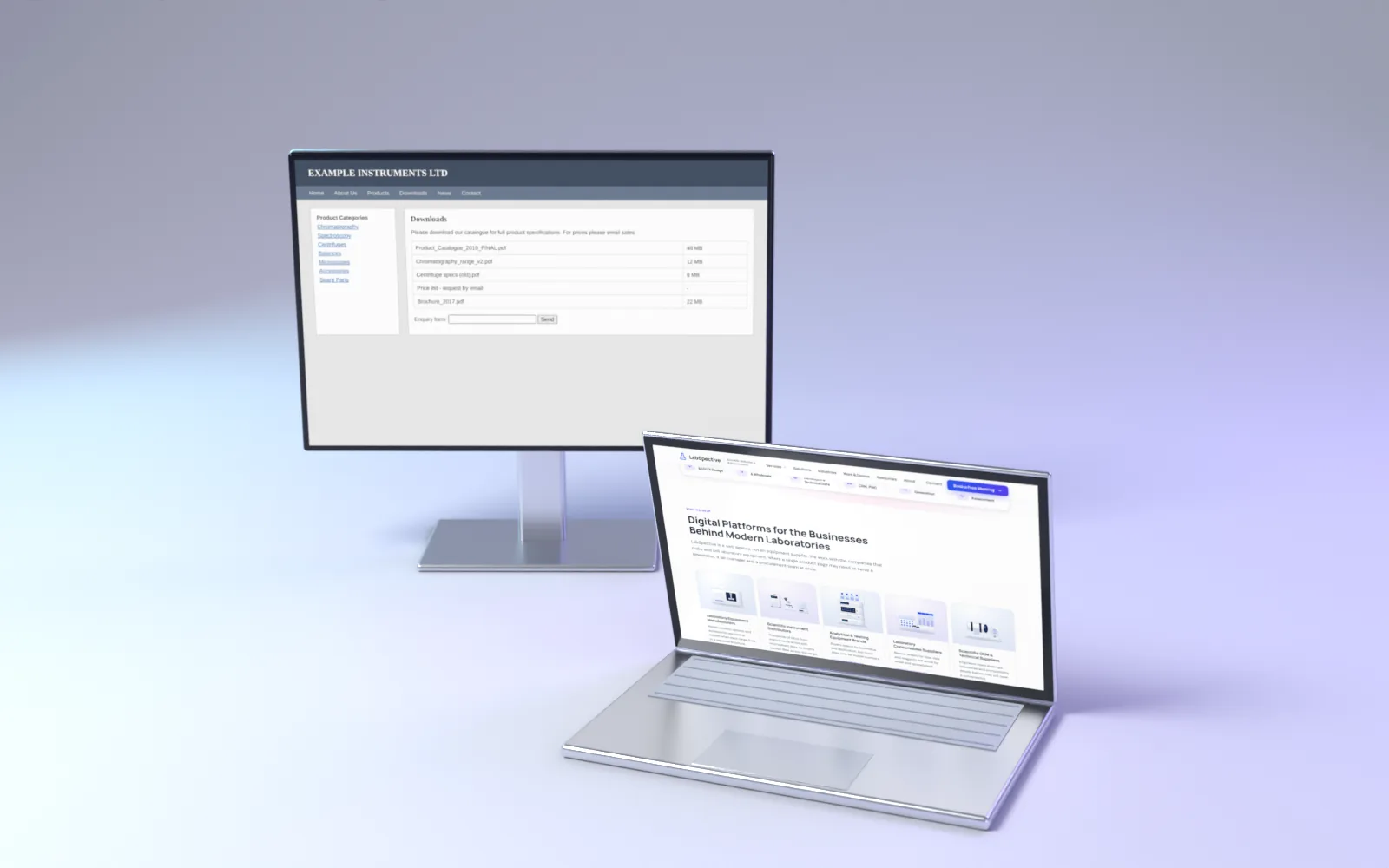
Product information is maintained in a PIM, a spreadsheet and the website, and they drift apart.
ERP, CRM & PunchOut Integration
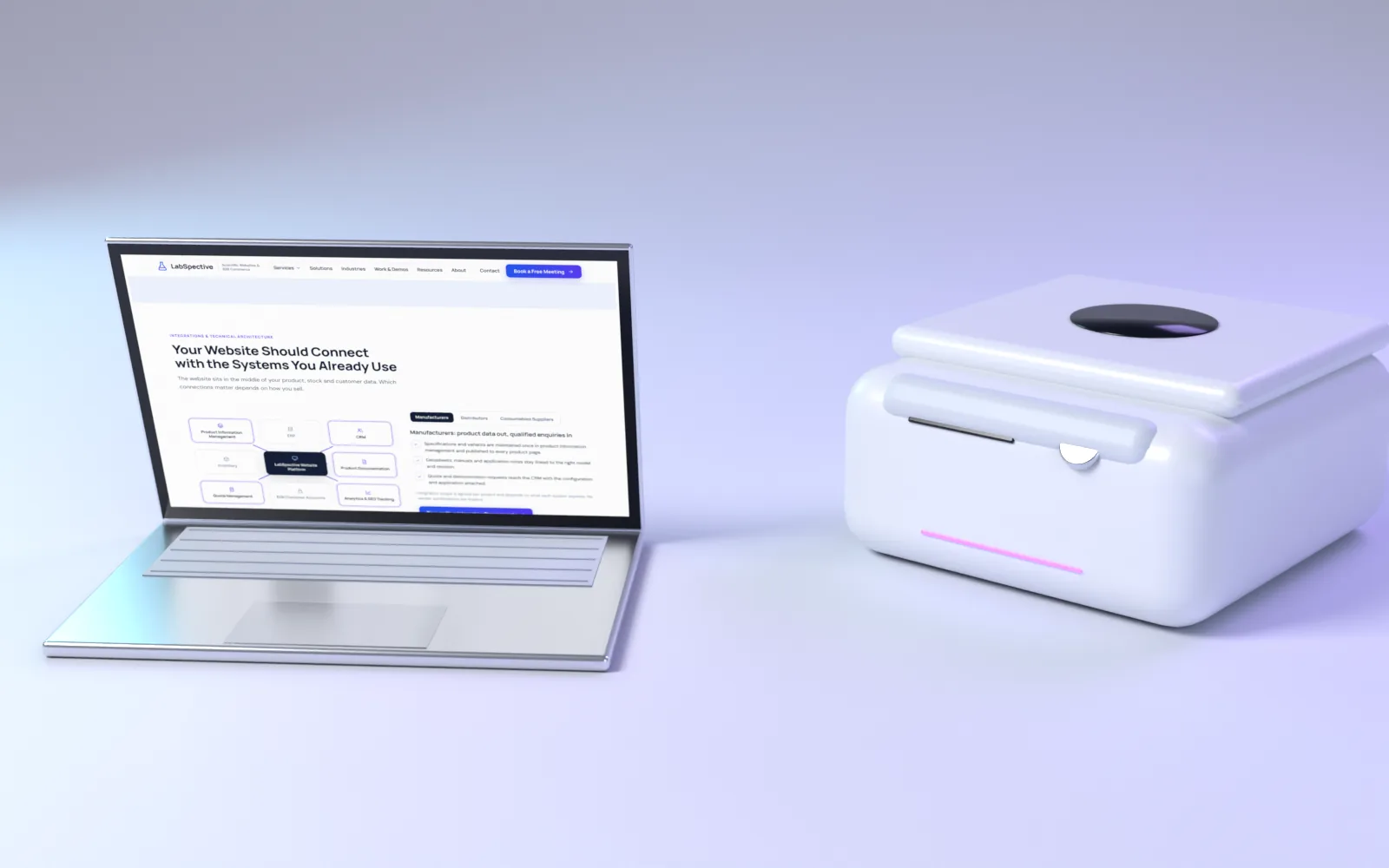
Your website should not be another place where product and customer data is typed in by hand. We connect it to your ERP, PIM, CRM and inventory systems, and to customers' e-procurement platforms through PunchOut, so specifications, stock, pricing, quotes and orders move where they need to go.
The problem
Product information is maintained in a PIM, a spreadsheet and the website, and they drift apart.
Customers ask about stock because the website cannot show it.
Quote requests reach the CRM as plain emails without the products or configuration attached.
What's included
Each project is scoped after discovery. These are the parts most projects of this kind include.
We map each system, what data it holds and how it can be accessed: API, webhook or file exchange.
Product attributes, media and documents published from your product information source.
Pricing, availability and order data exchanged on a schedule or in real time where supported.
Quote, demo and contact requests created as CRM records with product and source details.
A small integration layer that retries failures and keeps systems loosely coupled.
E-procurement connections so institutional buyers shop your catalog at contract prices from their own purchasing system.
Most integration problems come from unclear ownership of data. Before writing any code, we agree which system is the source of truth for each piece of information and how often it needs to move.
Product descriptions and specifications usually live in a PIM or the website, prices and stock in the ERP, and customer relationships in the CRM. The website reads from each source and writes orders, quotes and leads back to the right place.
For institutional customers, PunchOut (cXML or OCI) connects your catalog to their purchasing system, such as SAP Ariba, Coupa or Jaggaer. Contract pricing, cart return, purchase orders and order confirmations flow electronically, so fewer orders arrive by email.
Stock and pricing can sync in real time where the ERP supports it, or on a schedule such as every 15 minutes. Scheduled sync is often simpler and more reliable, and the website keeps showing the last good data if a sync fails.
Quote and demo requests are created as CRM records with products, configuration, application notes and the page they came from. That source data also shows which SEO and marketing channels produce real sales opportunities.
Deliverables
Process
Timelines are agreed after discovery, once scope and data are clear.
Which system owns which data, and how each one can be read or written.
Field-by-field mapping, transformation rules and how conflicts are resolved.
Connectors built against test environments with representative records.
Staged rollout with logs and alerts, then a runbook handed to your team.
FAQ
Usually, if it offers an API or file import and export. We confirm feasibility during discovery, before quoting the integration.
It can be where the system supports webhooks or fast APIs. Many integrations run on a schedule, such as every 15 minutes, which is simpler and more reliable.
Failures are logged and retried, and your team is alerted if a problem persists. The website keeps showing the last good data.
We do not claim certifications. Integrations are built against each system's documented interfaces.
PunchOut uses the cXML and OCI standards supported by platforms such as SAP Ariba, Coupa and Jaggaer. Each customer connection is configured and tested with their procurement team. We do not claim vendor certifications.
Related services
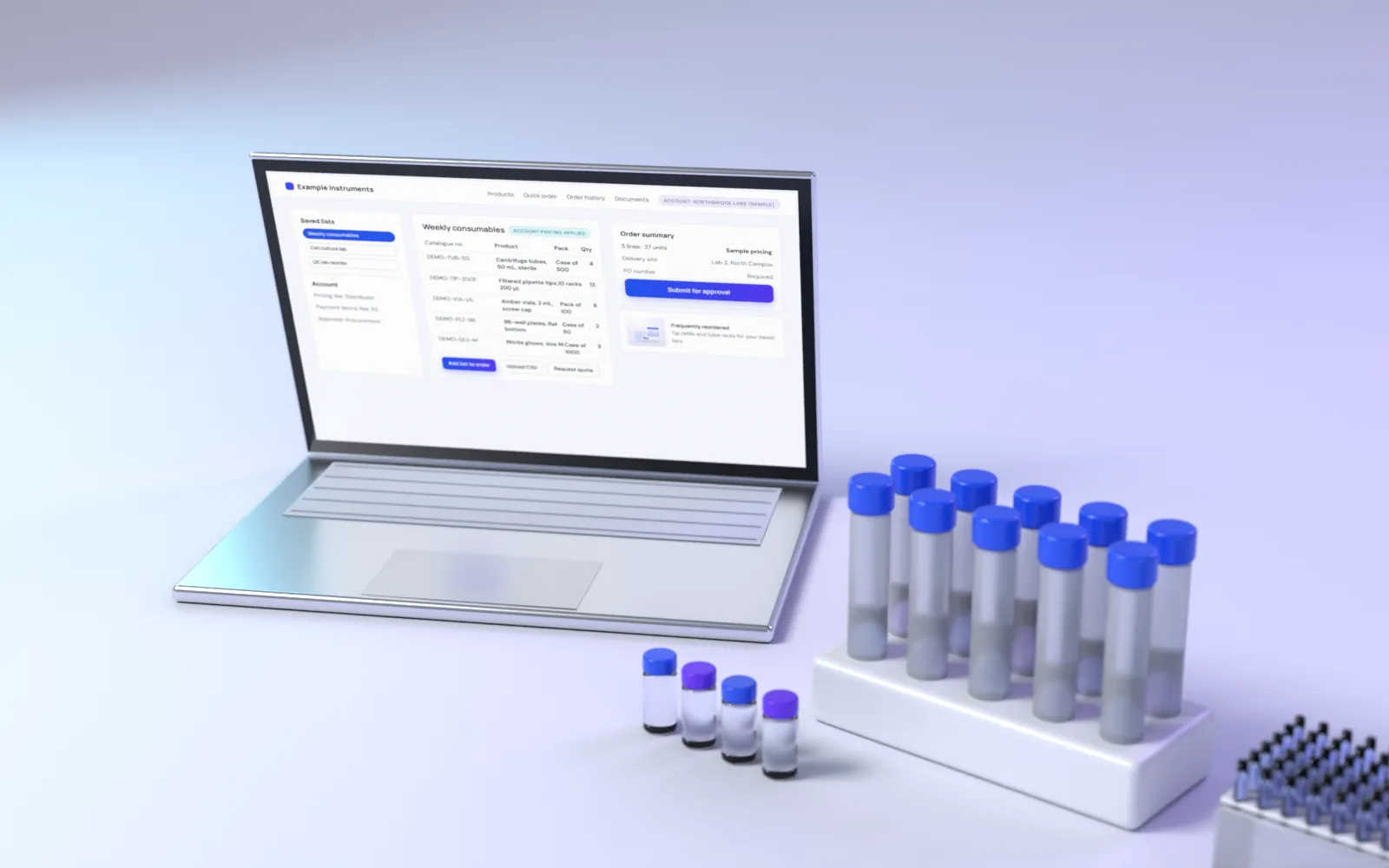
B2B ordering, PunchOut, account pricing and quotes for lab supplies.
View serviceRedesign and replatform without losing products or rankings.
View serviceStart a conversation
Book a free 30-minute meeting. We'll look at your current website and product range, and outline a practical approach, scope and next steps.