Specifications locked in PDFs
Buyers download a 40-page brochure to find one value, and search engines cannot read it.
Scientific Product Catalogs
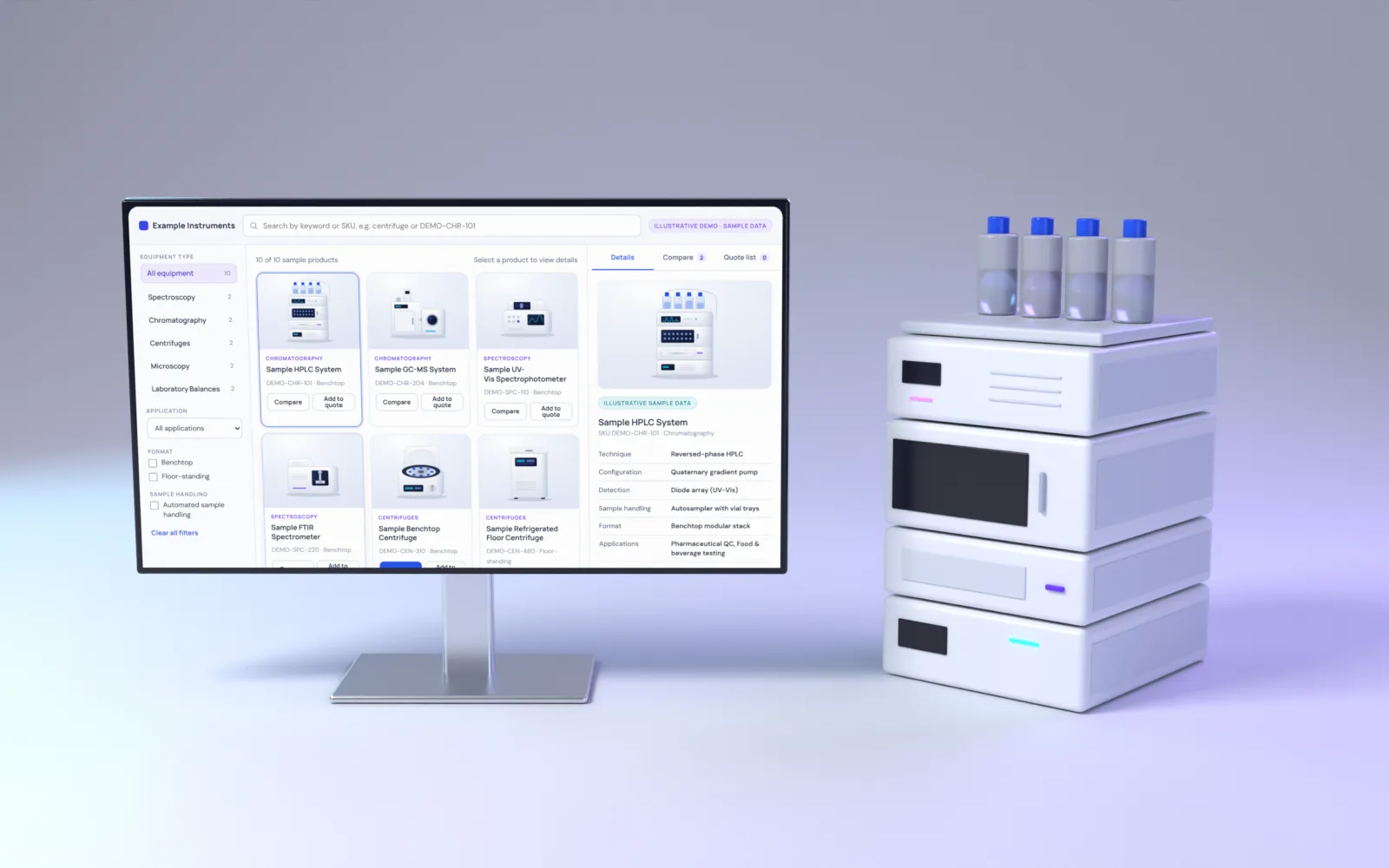
We turn brochures, spreadsheets and PDF datasheets into a structured online product catalog. Specifications become searchable fields, filters reflect how scientists specify equipment, and every product links to its current datasheets, SDS and certificates.
The problem
Buyers download a 40-page brochure to find one value, and search engines cannot read it.
Category and price filters cannot answer questions about capacity, technique or format.
Units, names and attributes differ between product families and suppliers.
What's included
Each project is scoped after discovery. These are the parts most projects of this kind include.
One defined set of attributes per product family, with units and allowed values.
Search by name, SKU or keyword, filtered by the specifications buyers actually use.
Side-by-side specification tables with differences highlighted.
Datasheets, manuals, certificates and application notes linked to the right products.
Accessories, consumables, spare parts and compatible modules shown on each product.
Safety data sheets per product and certificates of analysis searchable by lot number.
A scientific product catalog is only as useful as the data behind it. Before designing templates, we define how products are described, so search, filters, comparison and SEO all work from the same clean information.
Each family gets its own set of attributes with fixed units and allowed values. A centrifuge needs maximum speed, RCF, rotor types and capacity; a balance needs readability, capacity and calibration type. Consistent units are what make filtering and comparison reliable.
Voltage options, rotor configurations, pack sizes and purity grades are handled as variants of one product, each with its own SKU, price and stock. This avoids hundreds of near-identical pages competing with each other in search results.
Search should find products by catalog number, model name, partial SKU and, for chemicals and reagents, CAS number. Typos and spacing differences in part numbers should still return the right product.
Datasheets, manuals, application notes, SDS and certificates of analysis are stored once and linked to the right products and lot numbers. Replacing a file updates it everywhere it appears.
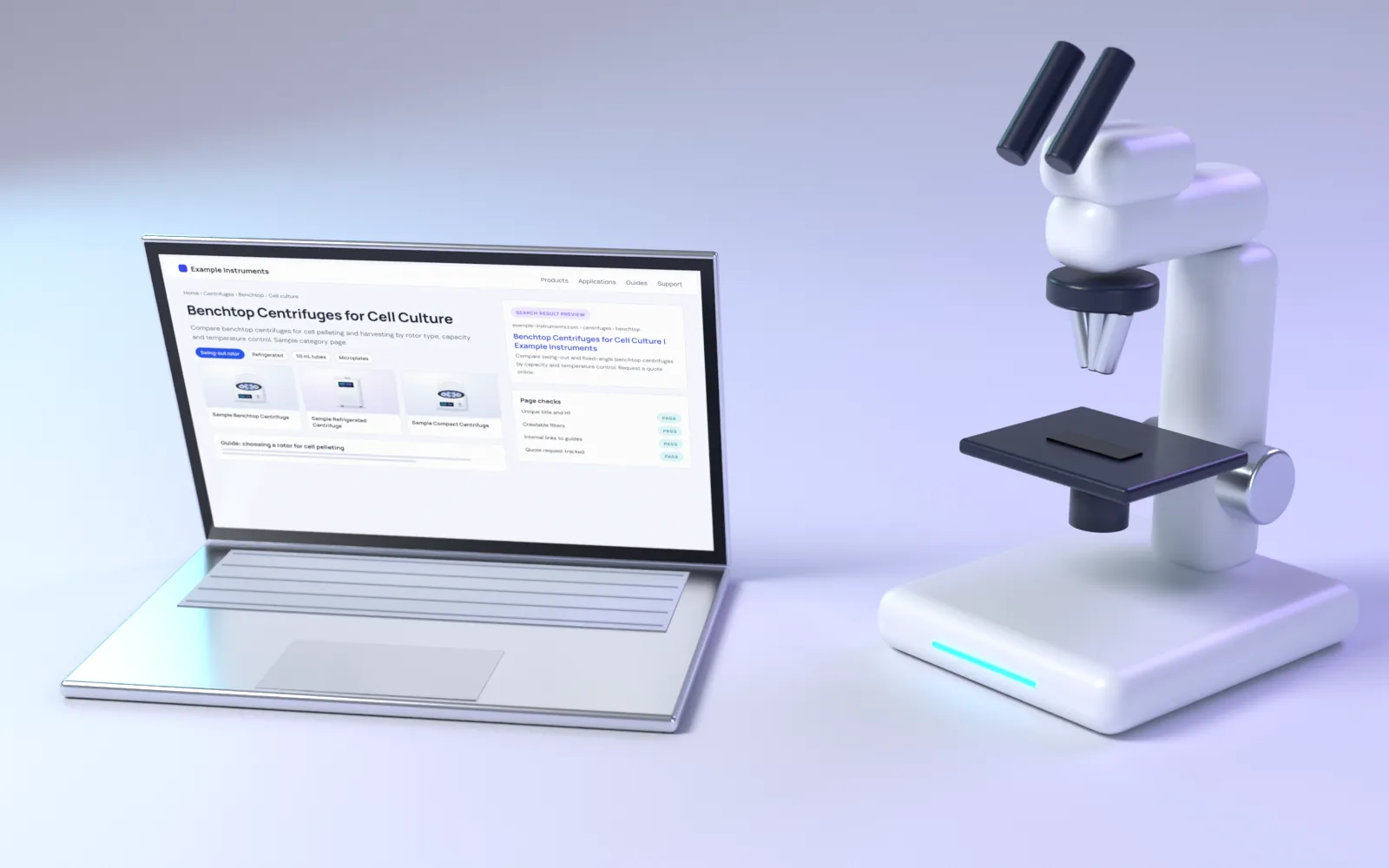
Filters are built so that important combinations, such as benchtop refrigerated centrifuges, can have their own indexable pages, while minor filter combinations do not create thousands of thin URLs. This is where catalog design and lab equipment SEO meet.
Deliverables
Process
Timelines are agreed after discovery, once scope and data are clear.
Review a sample of products from every family to find gaps, duplicates and unit conflicts.
Agree the fields, units and filters per family, and how documents relate to products.
Catalog templates, filters and comparison built, then data imported in batches with checks.
Your product specialists approve each family before it goes live.
FAQ
Yes. Most catalogs start that way. The data audit shows what needs cleaning, and we agree who fixes each part before import.
Comparison can be set up for two or more products. We usually recommend up to four so the table stays readable on smaller screens.
Documents are stored once and linked to products. Replacing a file updates it everywhere it appears, and older revisions can be archived.
No. Missing values are flagged in the audit for your team to supply. Nothing is published without your approval.
If several systems or channels use the same product data, a PIM is often worth it. Smaller catalogs can be managed well in the website itself. We recommend an approach after the data audit.
Related services
Lab equipment website design built around your instrument range.
View serviceConnect ERP, PIM, CRM and e-procurement systems to your site.
View serviceStart a conversation
Book a free 30-minute meeting. We'll look at your current website and product range, and outline a practical approach, scope and next steps.